Electrocardiography (EKG)
This 8-week course provides students with comprehensive instruction in the process and technique of applying cardiac monitoring devices. Students will receive hands-on experience in using both 3-lead and 4-lead cardiac monitors, as well as operating a 12-lead electrocardiogram (EKG) machine. These skills are essential for gathering and analyzing critical data related to a patient’s heart function.
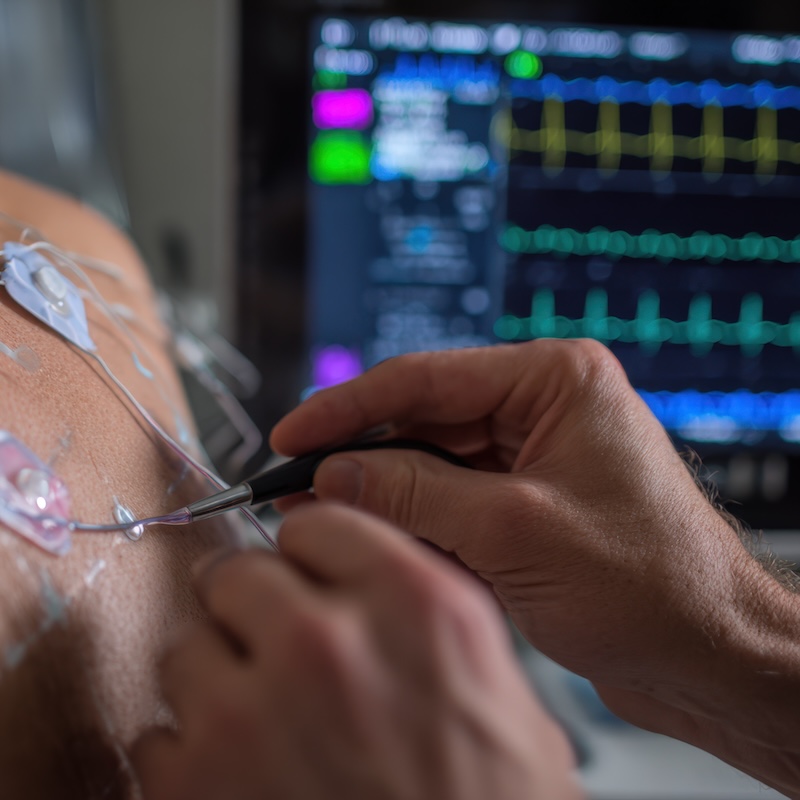
Upon completion of the course, students will be able to effectively apply monitoring devices to patients in a clinical setting.
- To prepare the patient prior to the application of the EKG leads
- To understand the operation of the monitor EKG machine being used
- To understand the definition of the 3 or 4 lead monitor vs the 12 lead EKG machine
- To recognize non-lethal as well as lethal rhythms
- To learn the anatomy of the heart and how it relates to the EKG
Electrocardiography
Instructor: Amanda Davis, RRT
Required Textbook: EKG, Plain and Simple 4th Edition, Karen M. Ellis
Tuition: $250
Upcoming Course Date:
- November 2 - December 9, 2026 | Mondays and Wednesdays, 5-9 p.m.
|
Course Level Learning Outcomes (ACGM or WECM) |
Core Objectives |
Associated Course Activities, Assignments, Projects |
| Explain the meaning of an EKG | Critical Thinking | Recognize the functionality of the monitor/machine and how to change the settings |
| Know what the leads do | Critical Thinking | Apply leads to proper location in order to achieve the goal of receiving the function of the heart |
| Know the components of the heart | Critical Thinking | Recognize which part of the heart is generating what on the EKG and which lead is doing the generating |
| Knowing the components of the EKG equipment | Critical Thinking | Recognize the different types of electrodes used for different outcomes and the proper location on the patient |
| Recognizing the actual EKG | Critical Thinking | Use a manikin with an EKG stimulator, recognize and appropriately report readings |